DexArena
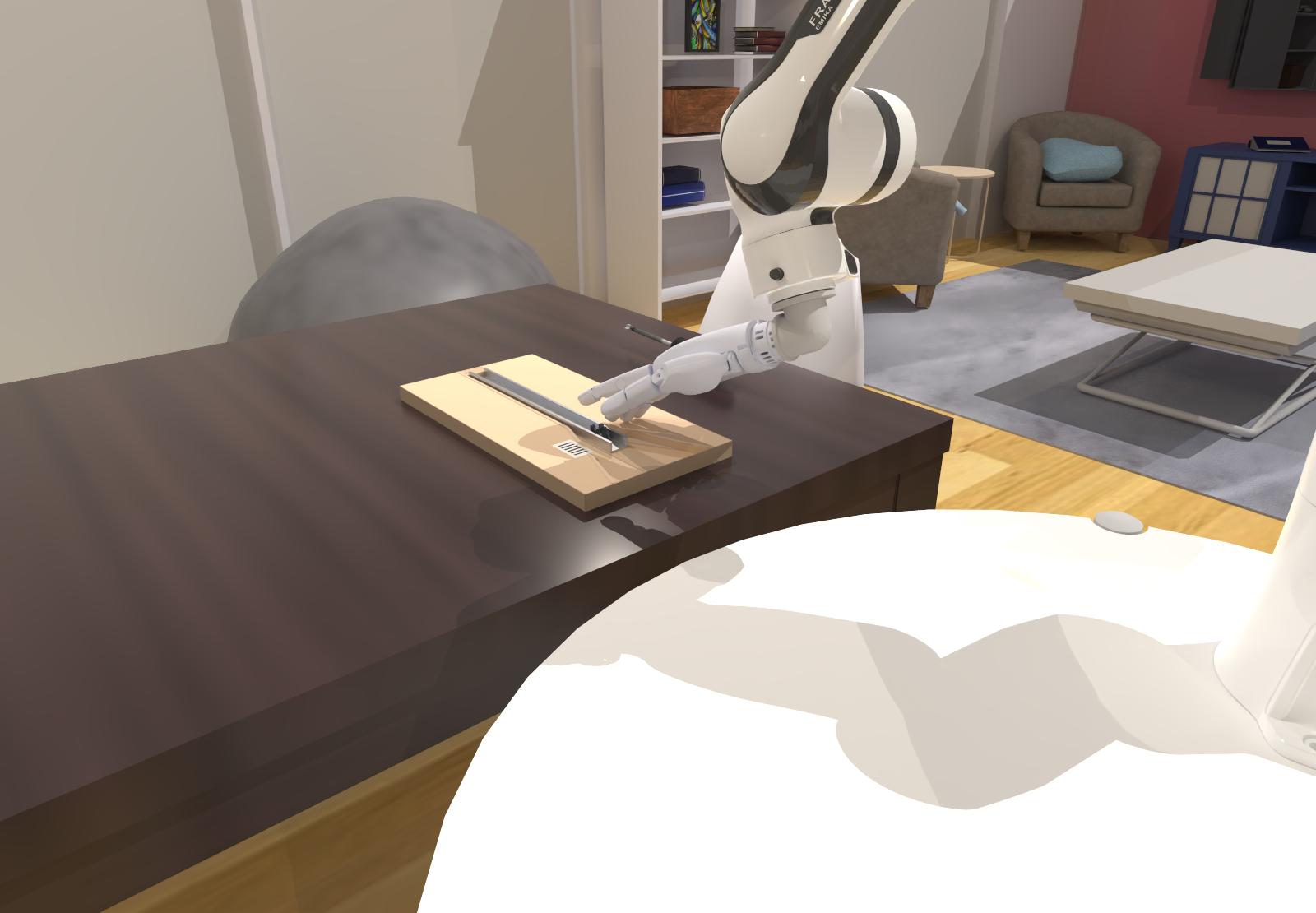
Dexterity over long horizons.
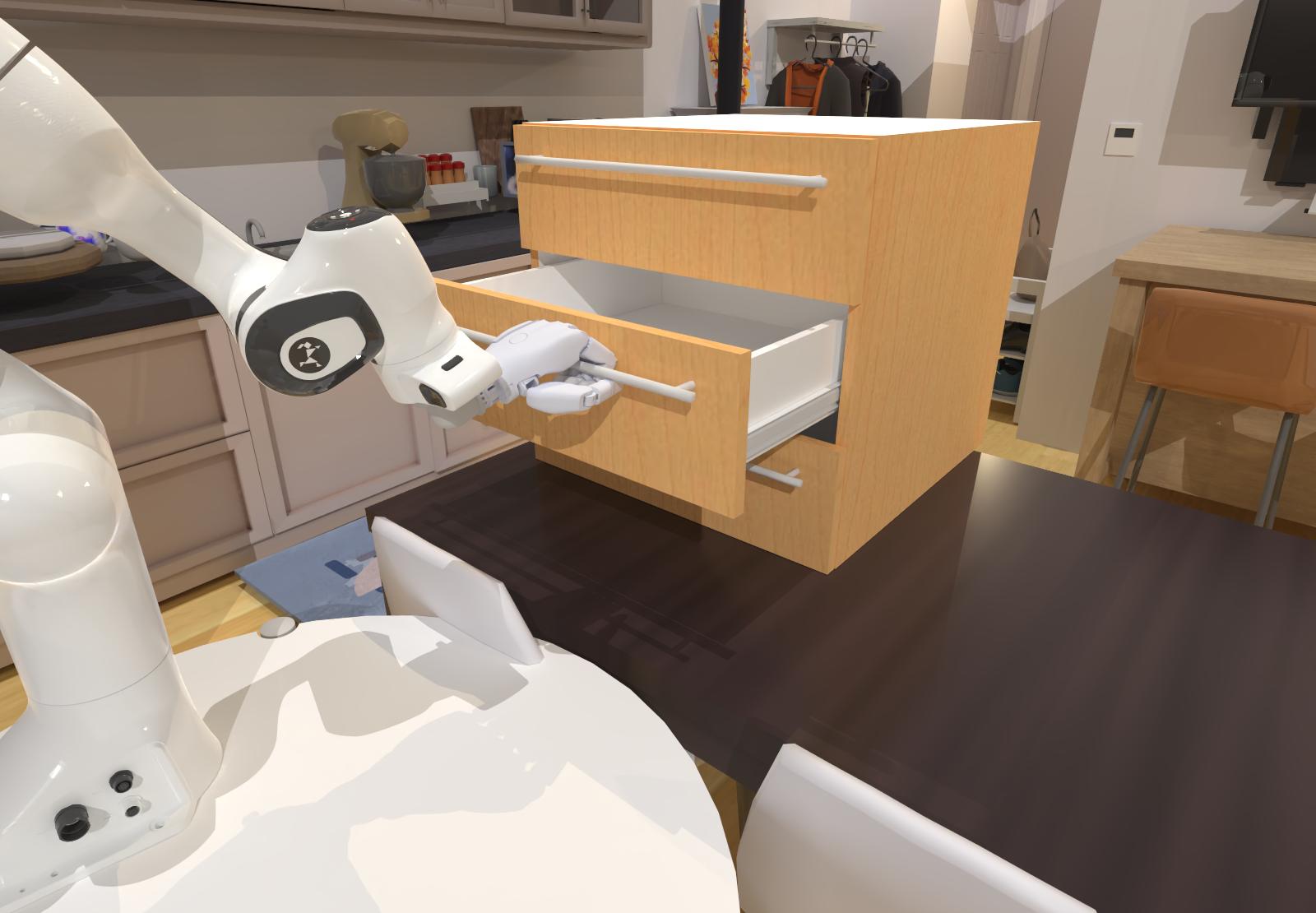
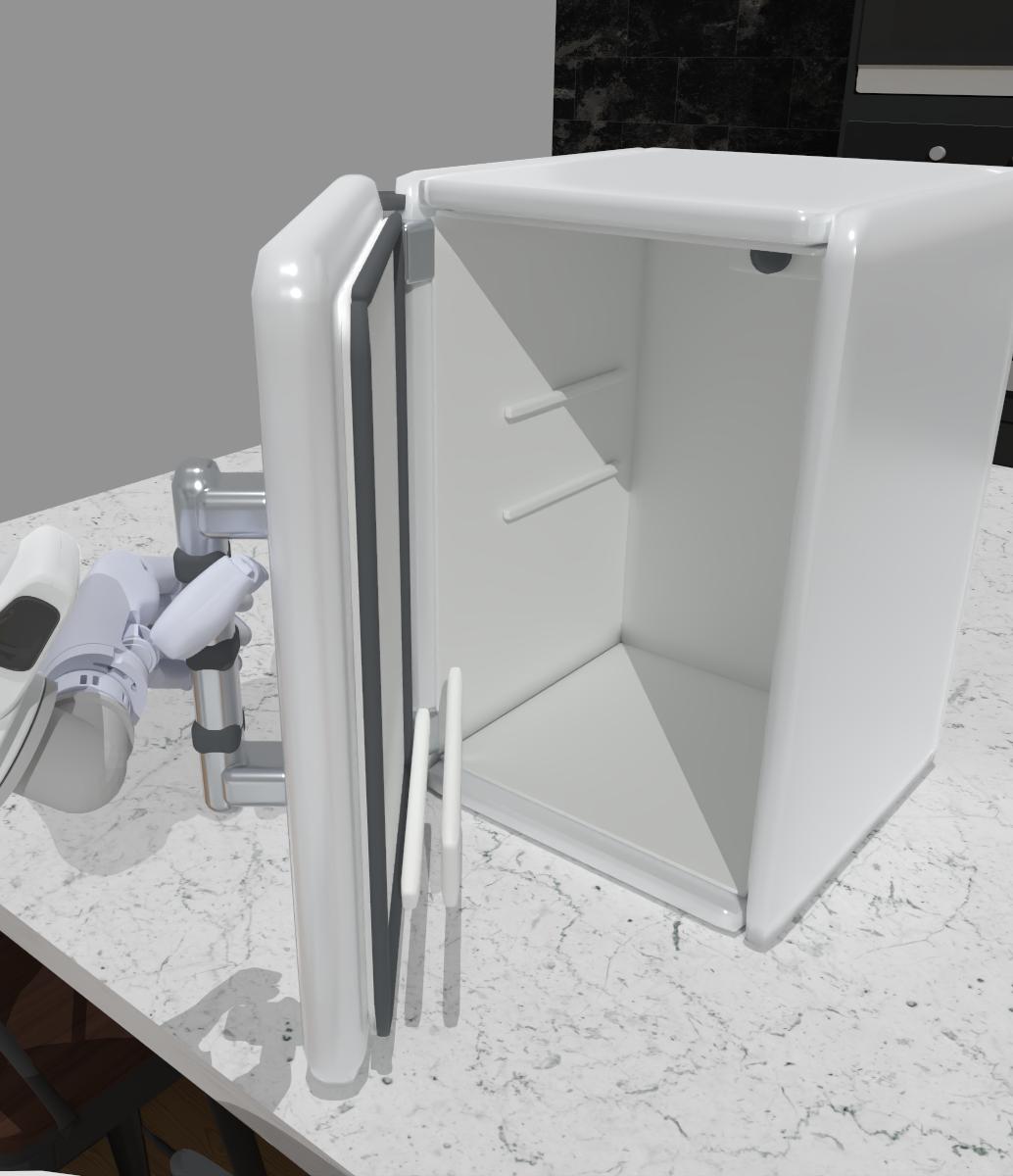
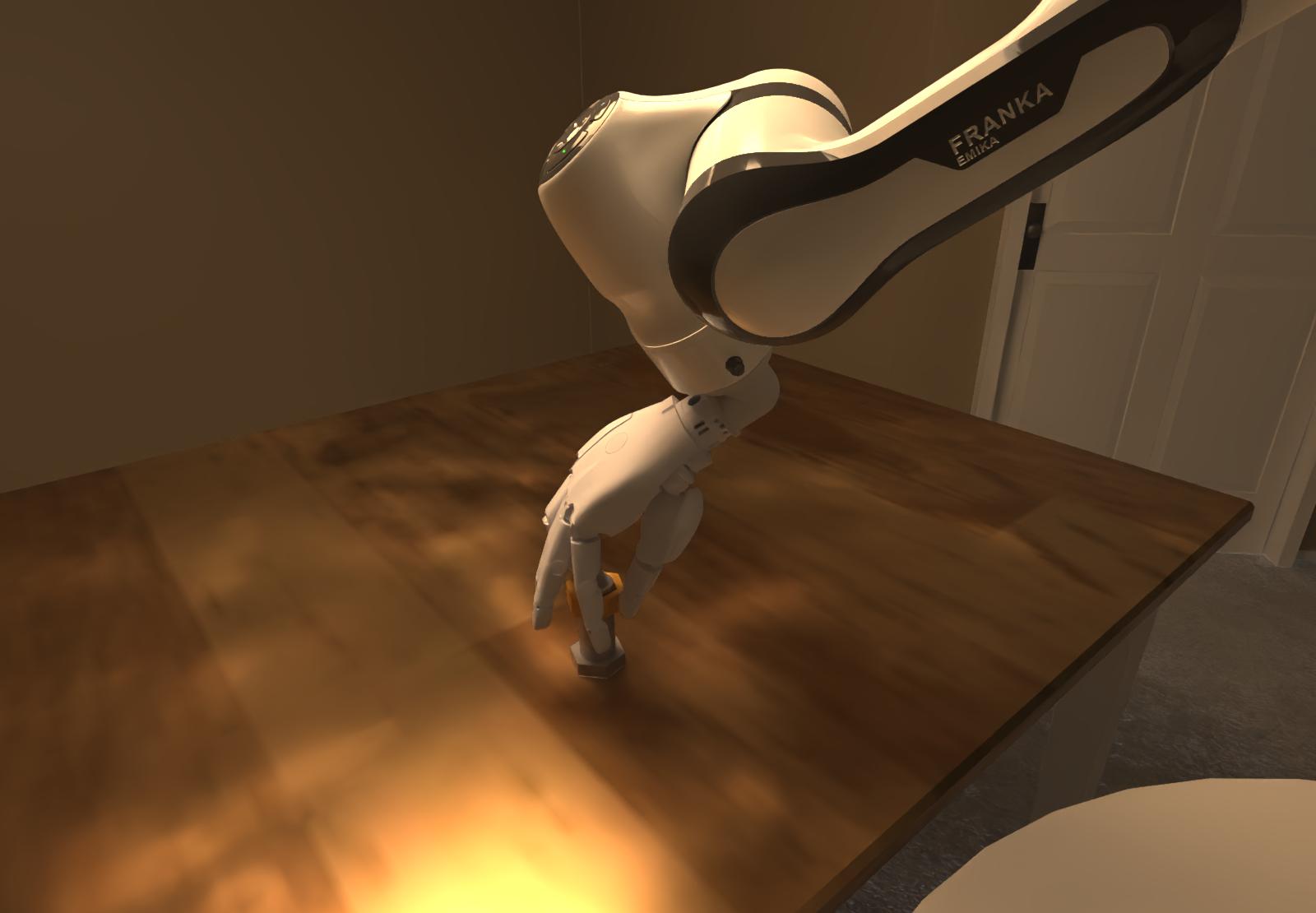
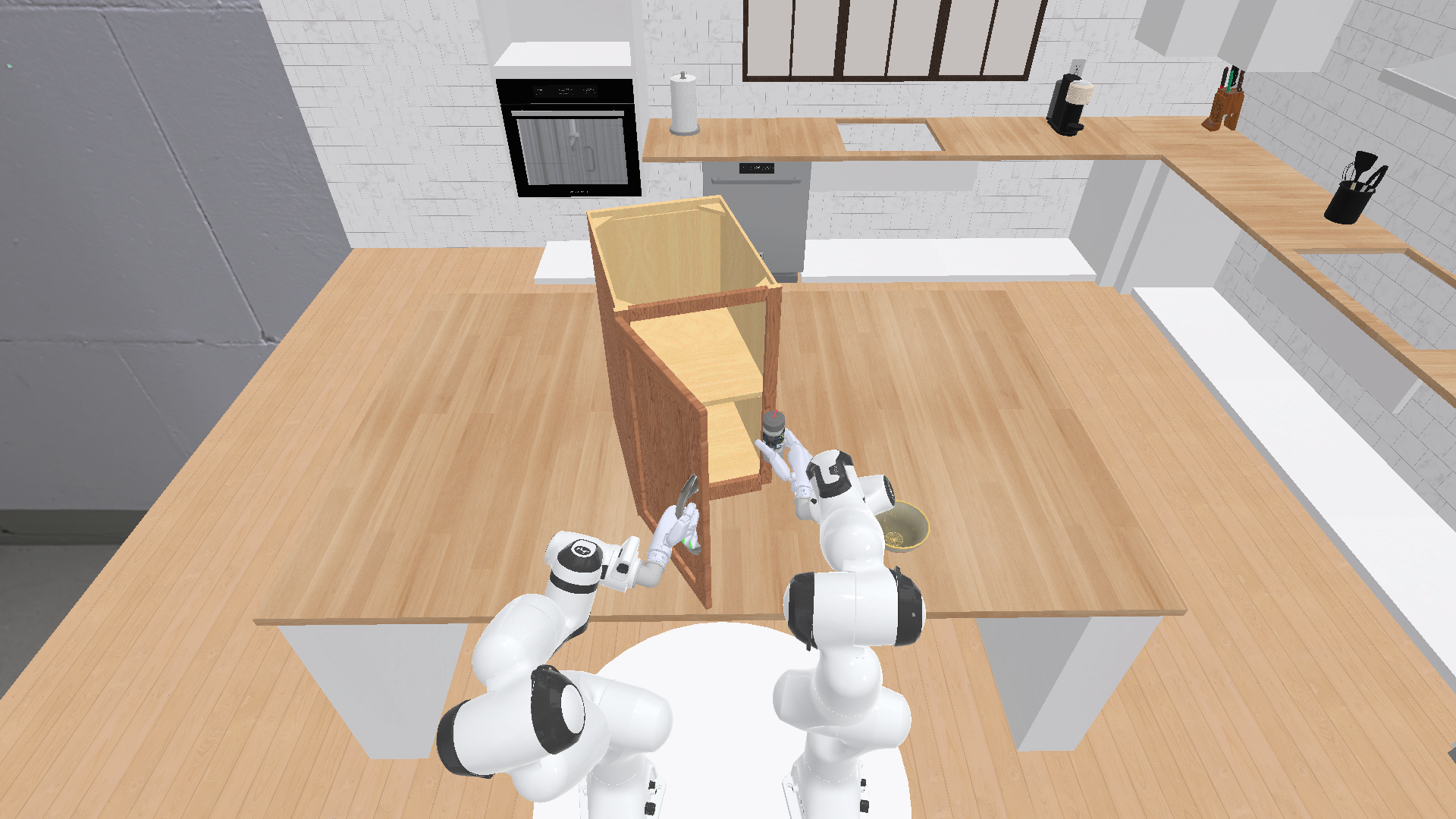
Execute precise skills, generalize across scenes, and compose behavior into complete bimanual tasks.
Discover the research↗Execute precise skills, generalize across scenes, and compose behavior into complete bimanual tasks.
Discover the research↗
Same skill.
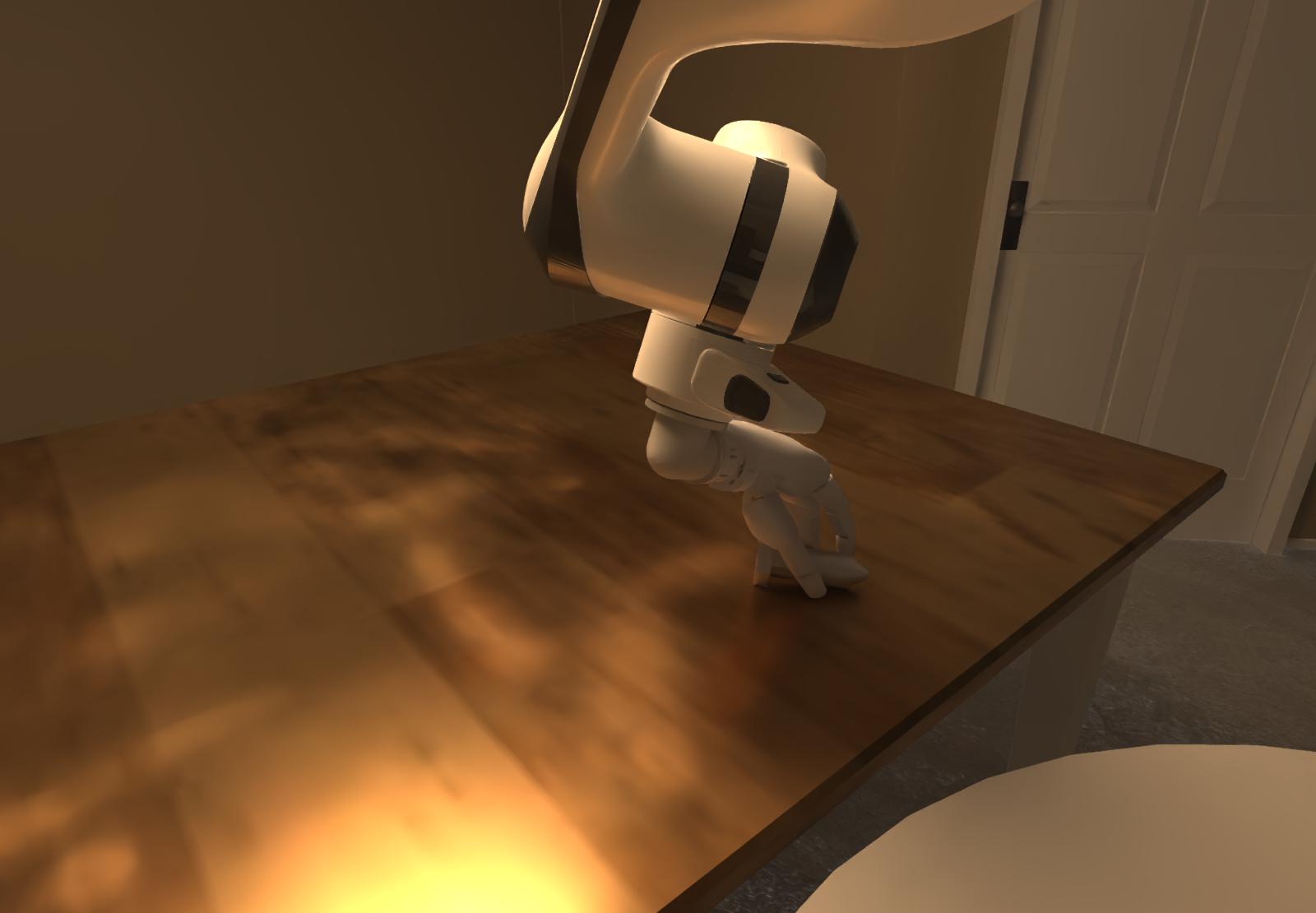
New scene.
Evaluate all 30 canonical stages on three native scene surfaces with fixed policy cameras.
Explore generalization↗
Two hands.
One task.
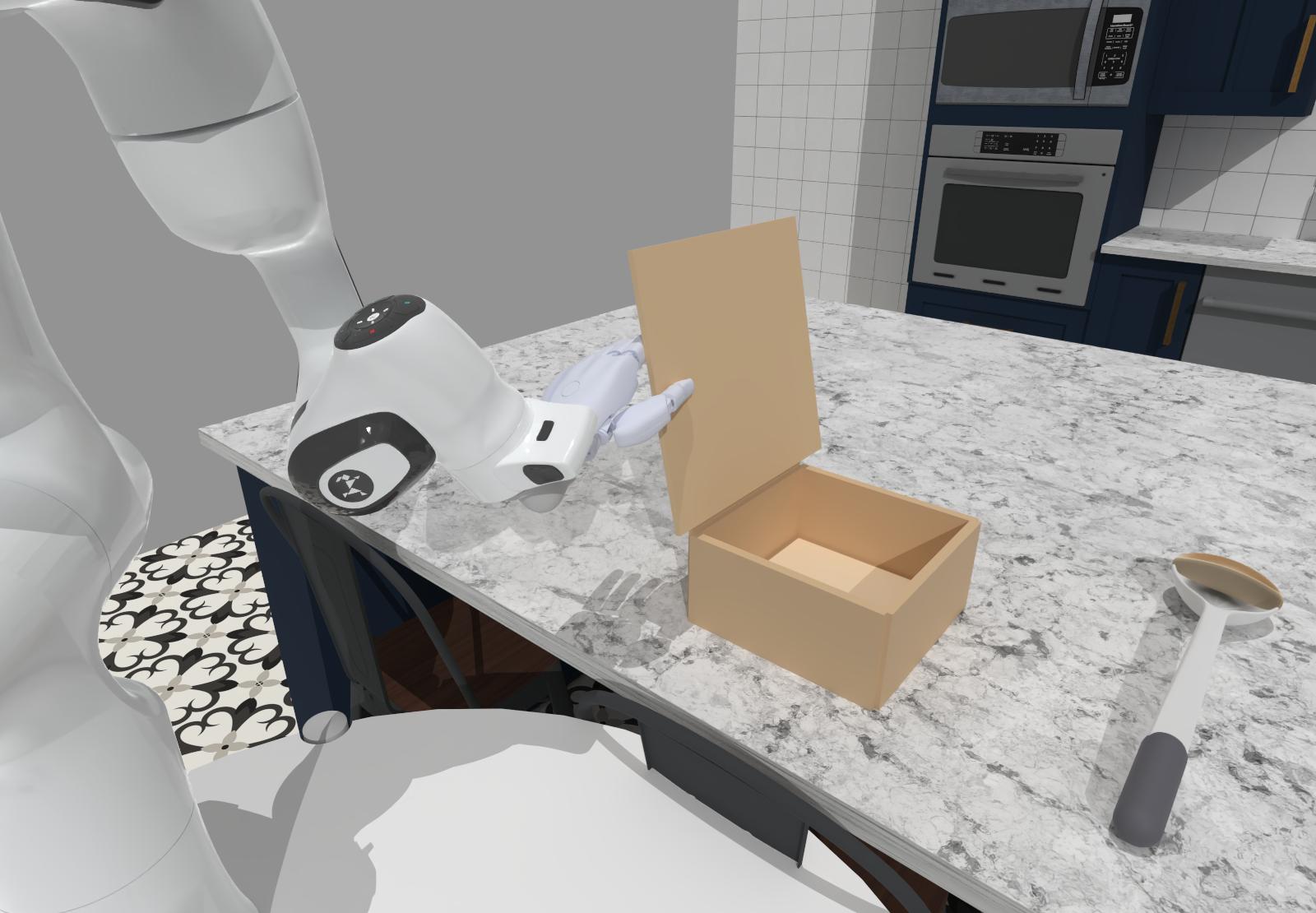
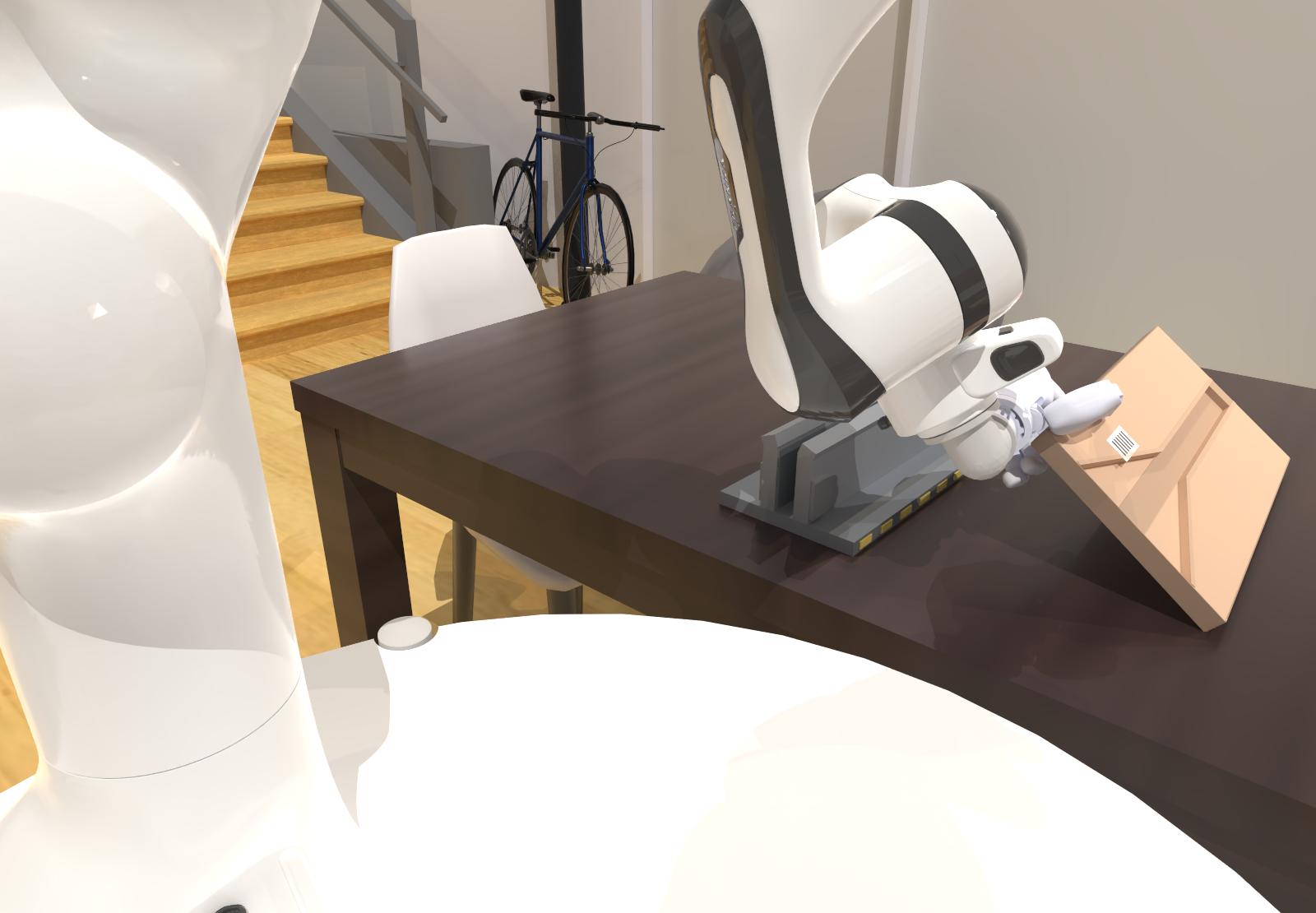
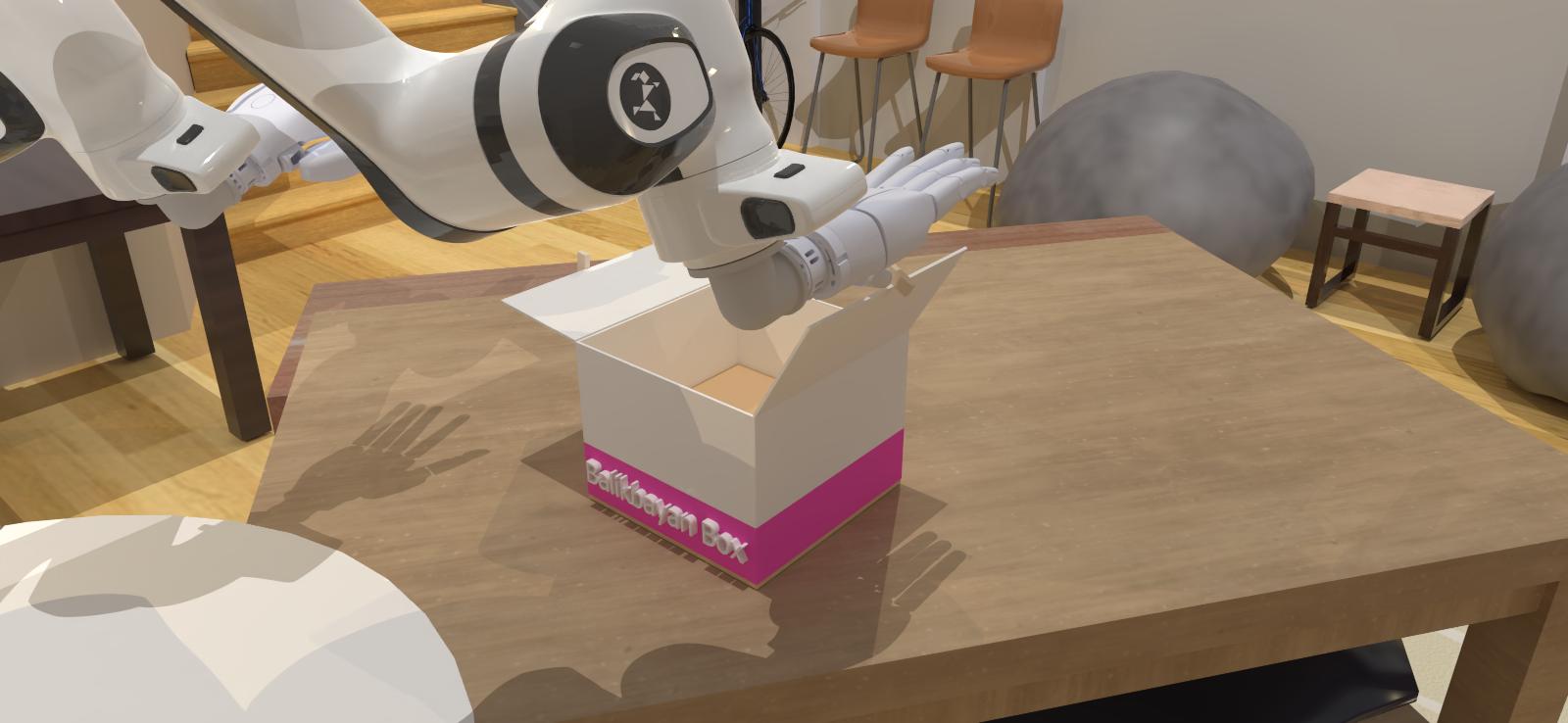
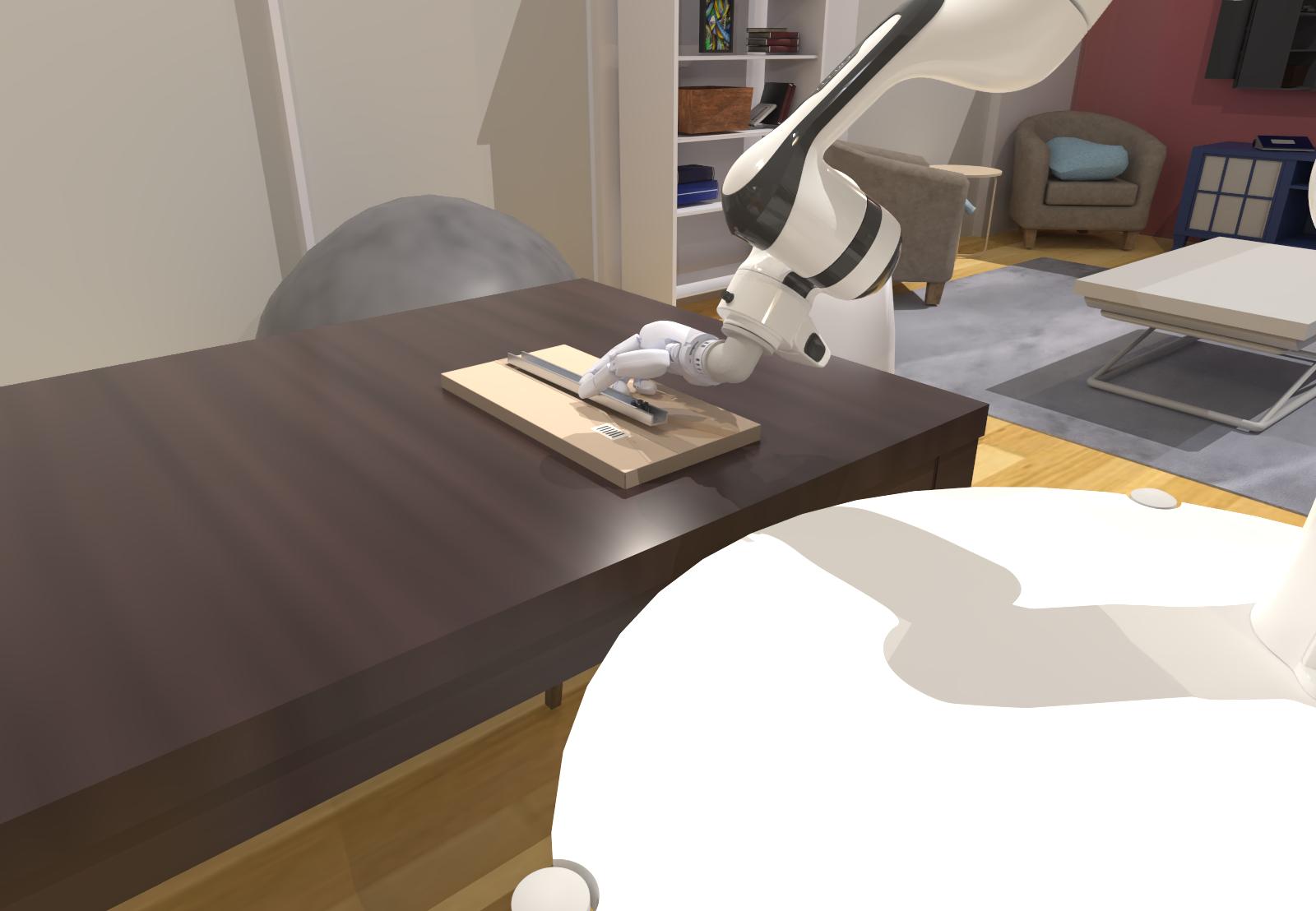
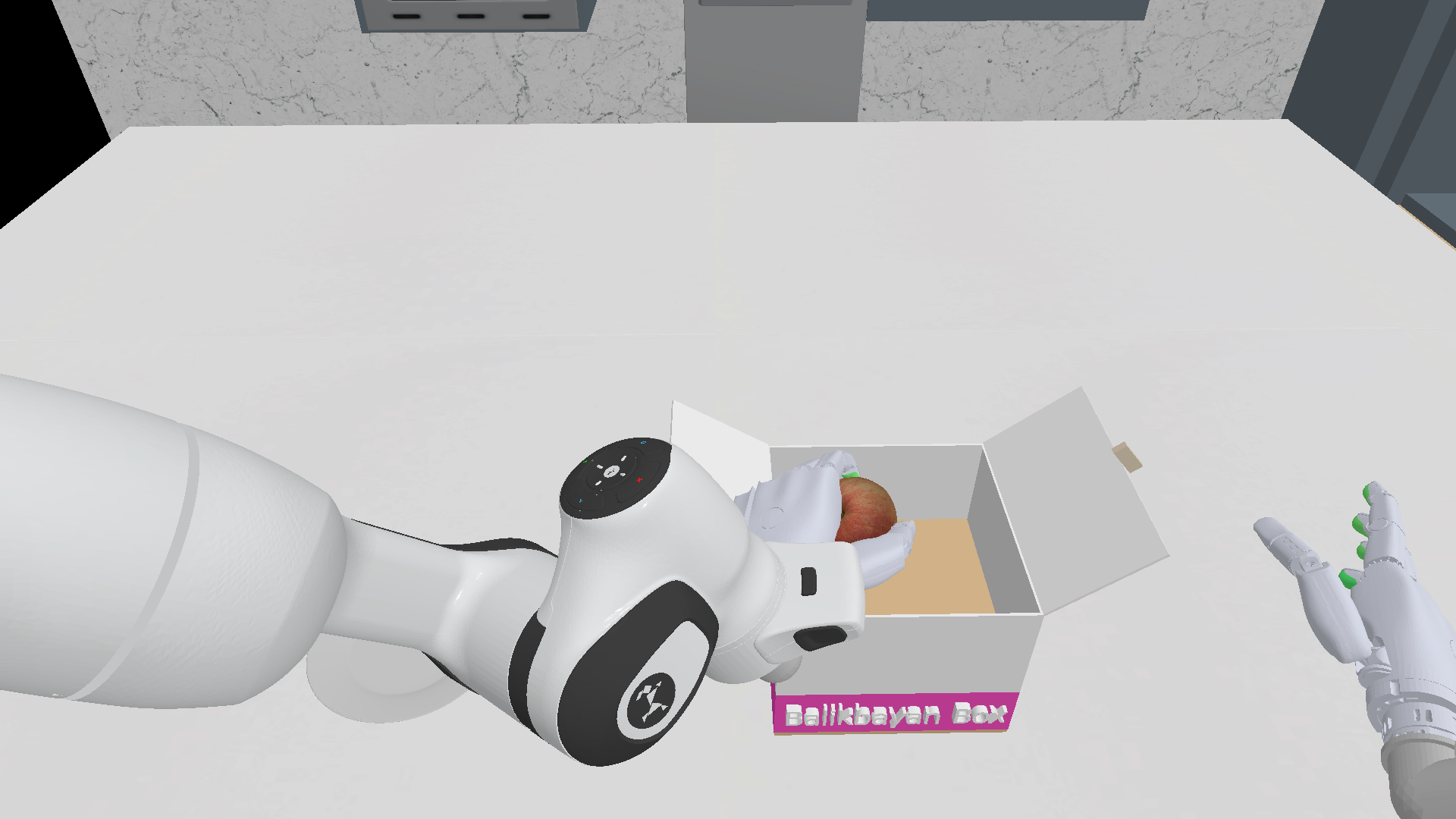
Coordinate both hands to open the flaps, then grasp and place the apple: two connected stages with physical success conditions.
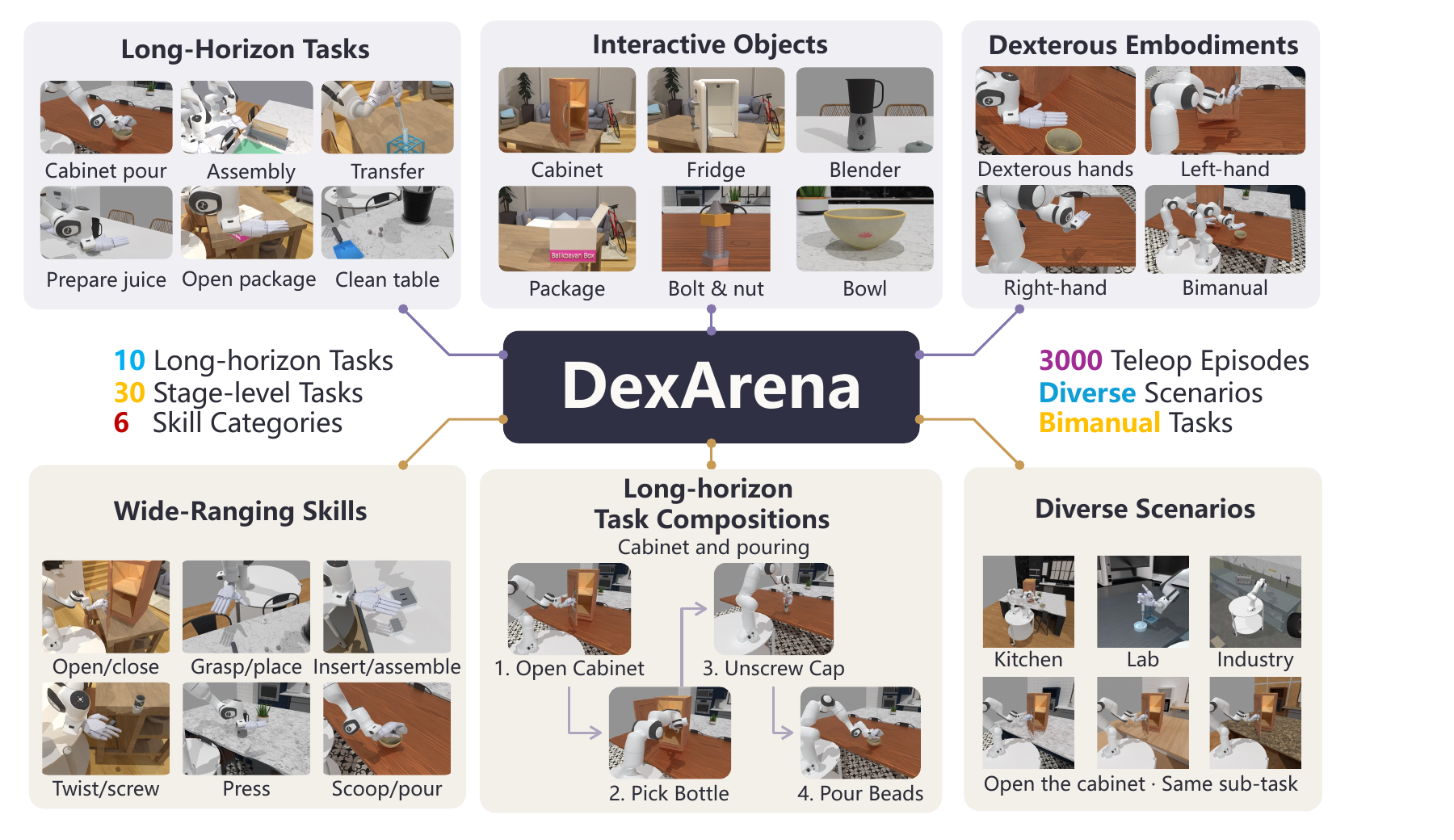
Explore Package Opening↗Ten complete tasks and thirty matched stage environments connect household, laboratory and industrial interactions. Persistent physical predicates measure both intermediate progress and complete behavior.

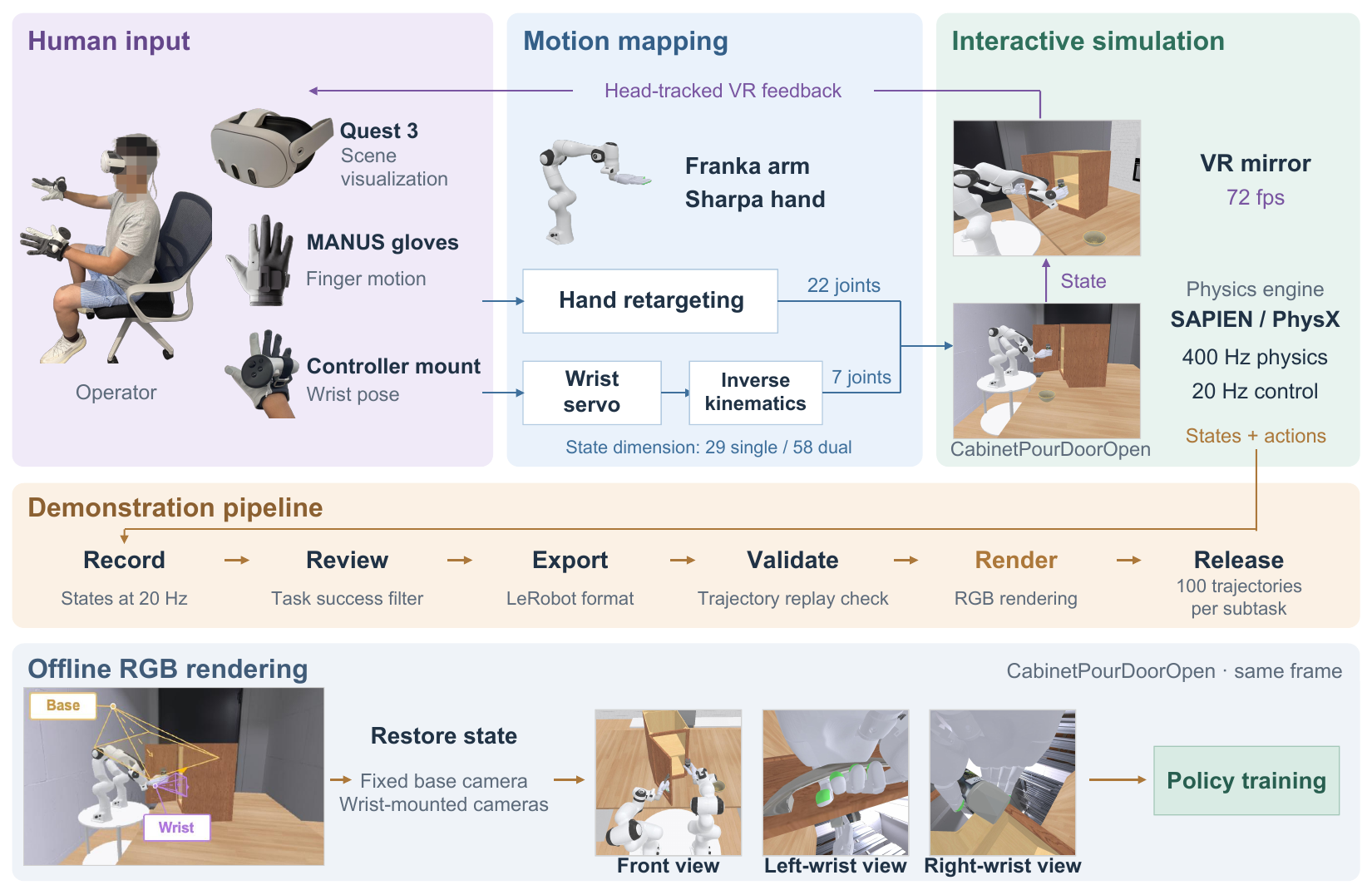
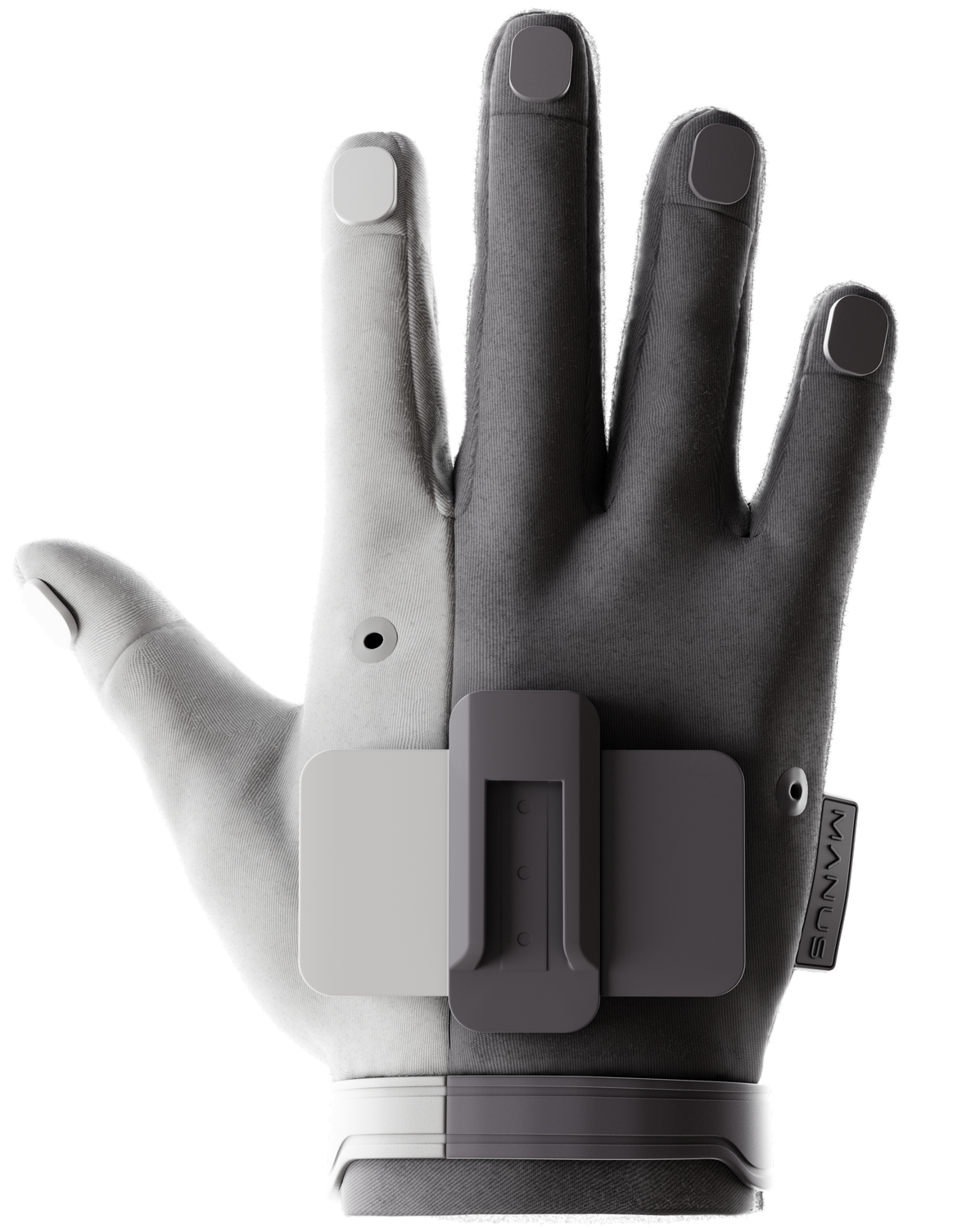
VR wrist tracking and glove inputs are mapped into absolute arm and hand targets. Episodes then pass through review, export and replay validation, with recorded simulator states retained for offline multi-view rendering.

100 episodes per canonical stage, recorded at 20 Hz.
Recorded state supports fidelity checks and open-loop trajectory validation.
The same recorded interaction can be rendered from fixed base and wrist views.
Six baselines reveal distinct limitations in stage execution, held-out-scene generalization and end-to-end task composition. Compare baseline results with shared-scale charts, heatmaps and downloadable tables.
30 stages · training scene
Compare policies →0230 stages × 3 native scenes
Explore scene transfer →0310 sequences · no stage resets
Inspect sequence success →These are research-preview baseline results, not community submissions.
From kitchen preparation to precision assembly, each long-horizon task is decomposed into physically grounded stages.
The same recorded stages, re-rendered across diverse RoboCasa interiors. Presentation scenes only, not new policy evaluations. Original images remain available as fallbacks.
Matched environments connect isolated skills to complete sequences. The same definitions carry through data collection and cross-scene evaluation.
Complete, dependent sequences
Physically grounded success conditions
Each column is one task. Each segment is one measurable stage.
Human demonstrations selected after successful action replay, with simulator states retained for restoration.
30 stages. 3 native kitchens.
Fixed tasks, different surroundings.

Persistent physical predicates distinguish stable completion from transient contact.
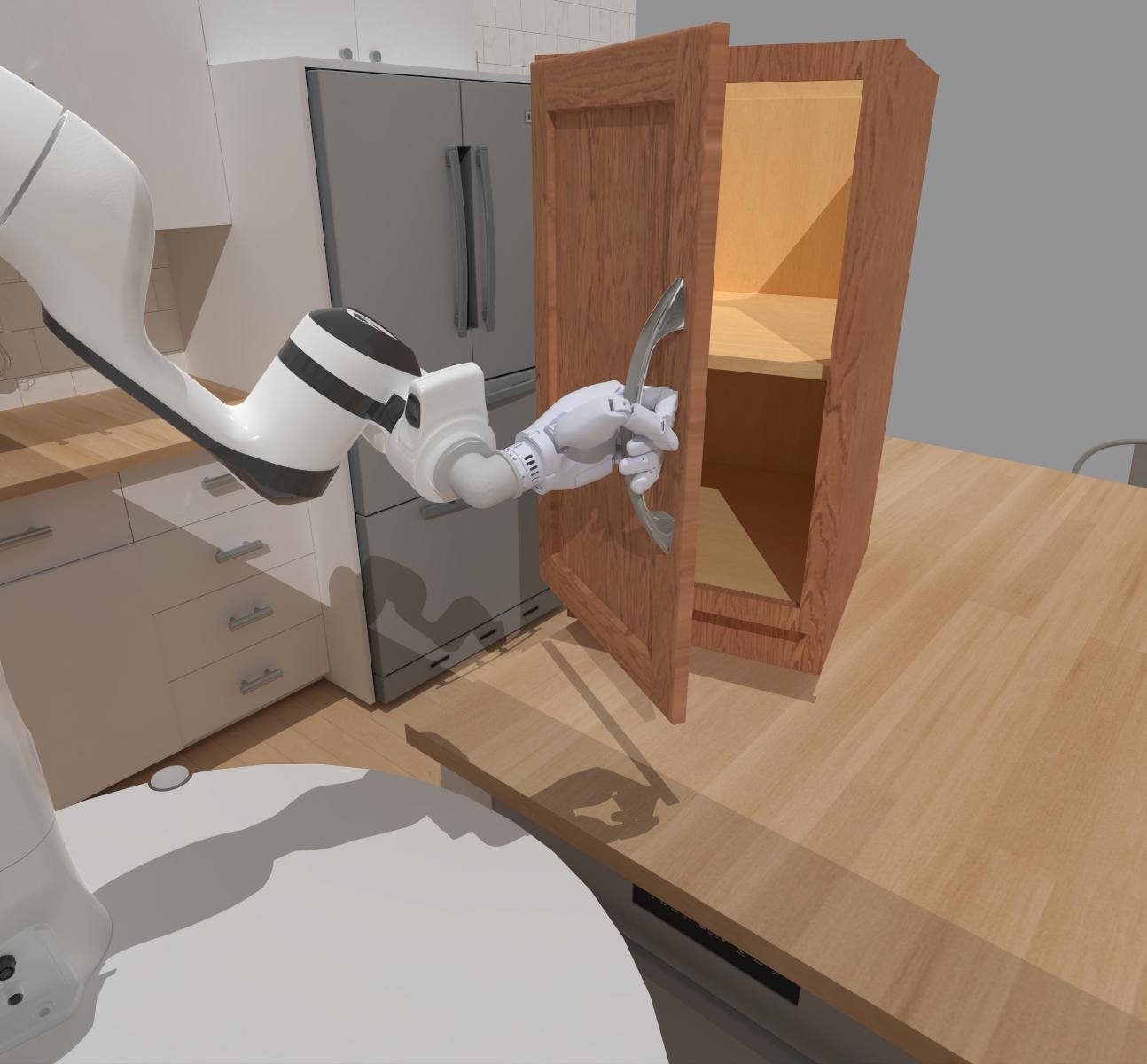
Explore a precise skill ↗


Keep task definitions fixed while changing the native kitchen environment.
01
02
03Execute connected stages in sequence, preserving the physical state between them.
Follow a complete sequence ↗
The released canonical data uses Panda arms with 22-DoF Sharpa hands and absolute joint-position targets: 7 arm + 22 hand joints per side.
The data pipeline retains the simulator state needed for deterministic restoration and offline multi-view rendering.
Human wrist and finger motion becomes robot joint targets at 20 Hz.

Review the episode and retain demonstrations that complete the task.

Recover saved simulator states for offline multi-view rendering.
Replay recorded actions and select 100 successful episodes per stage.
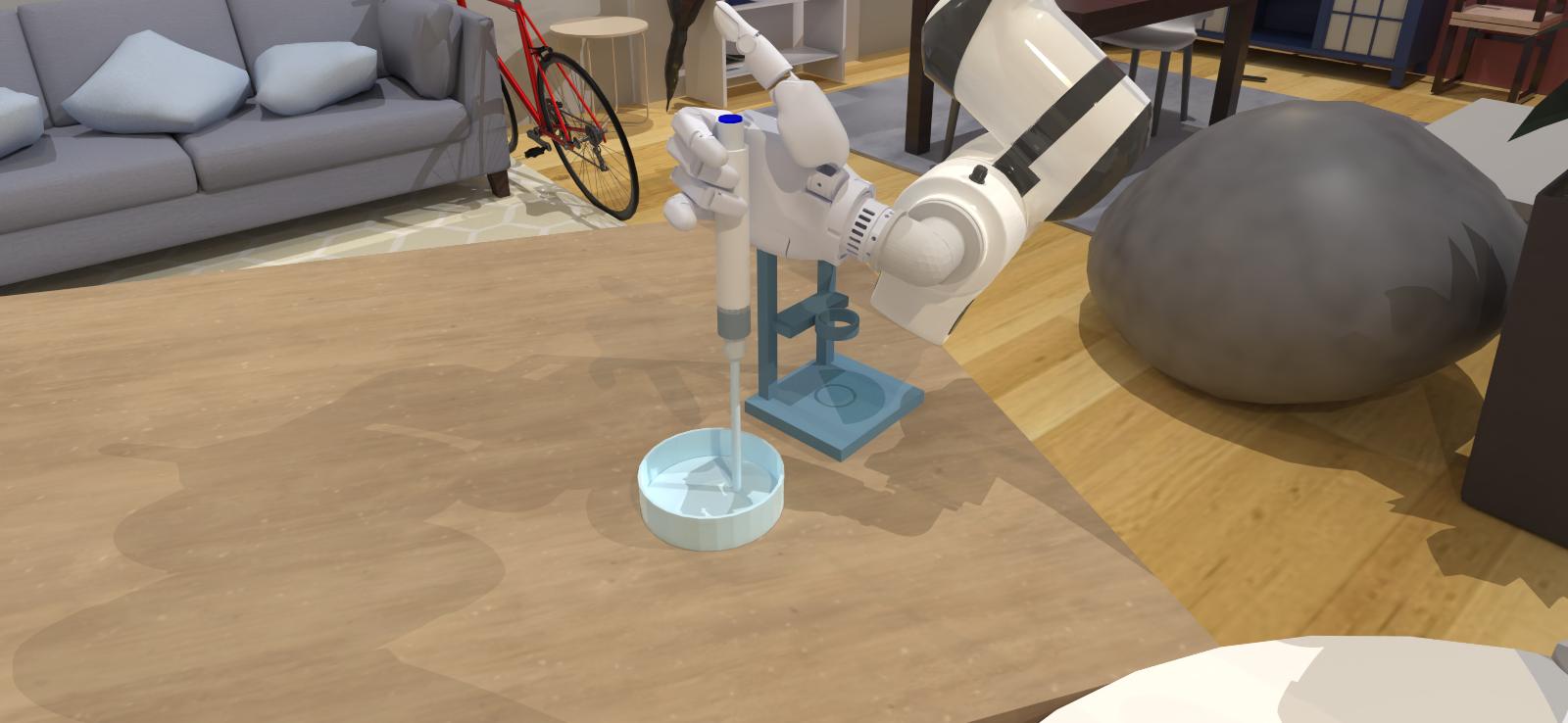
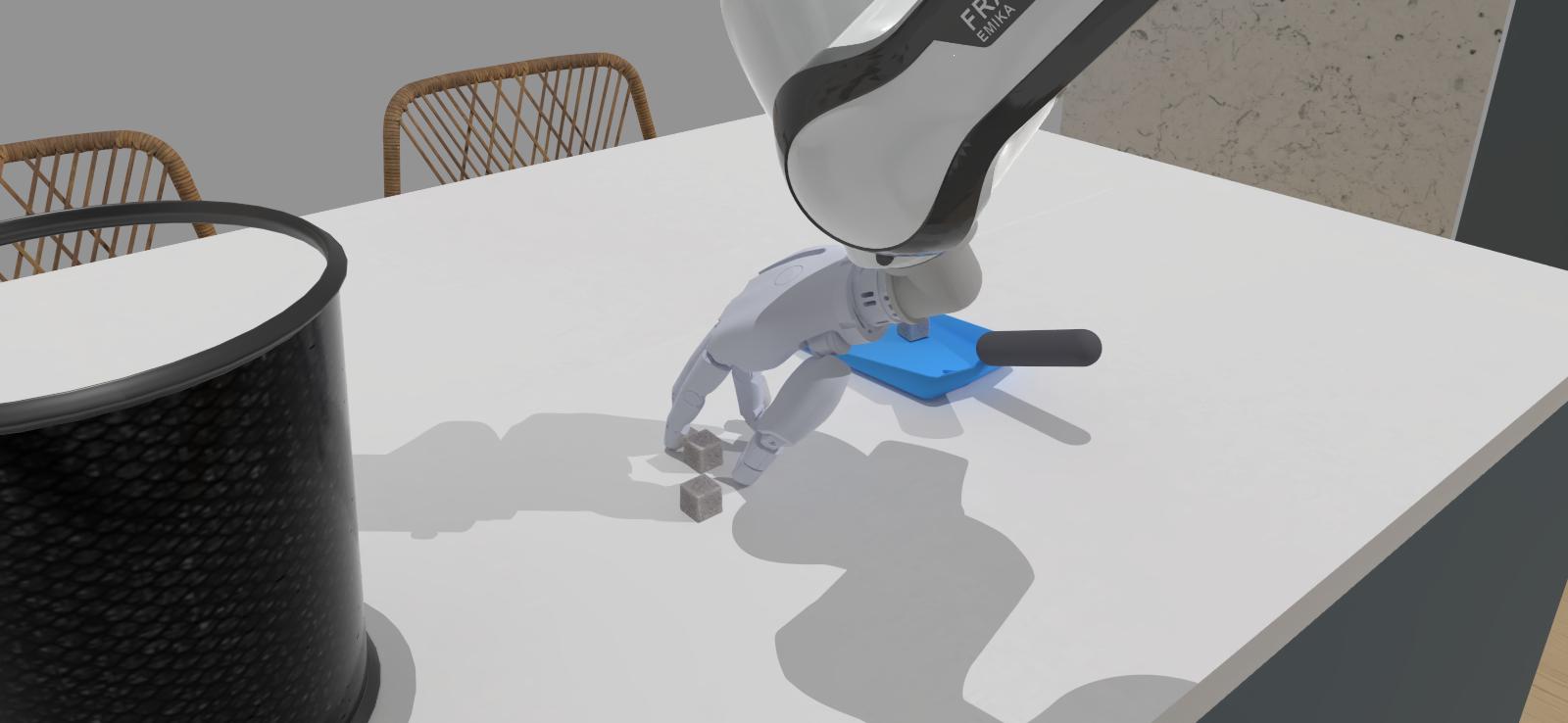
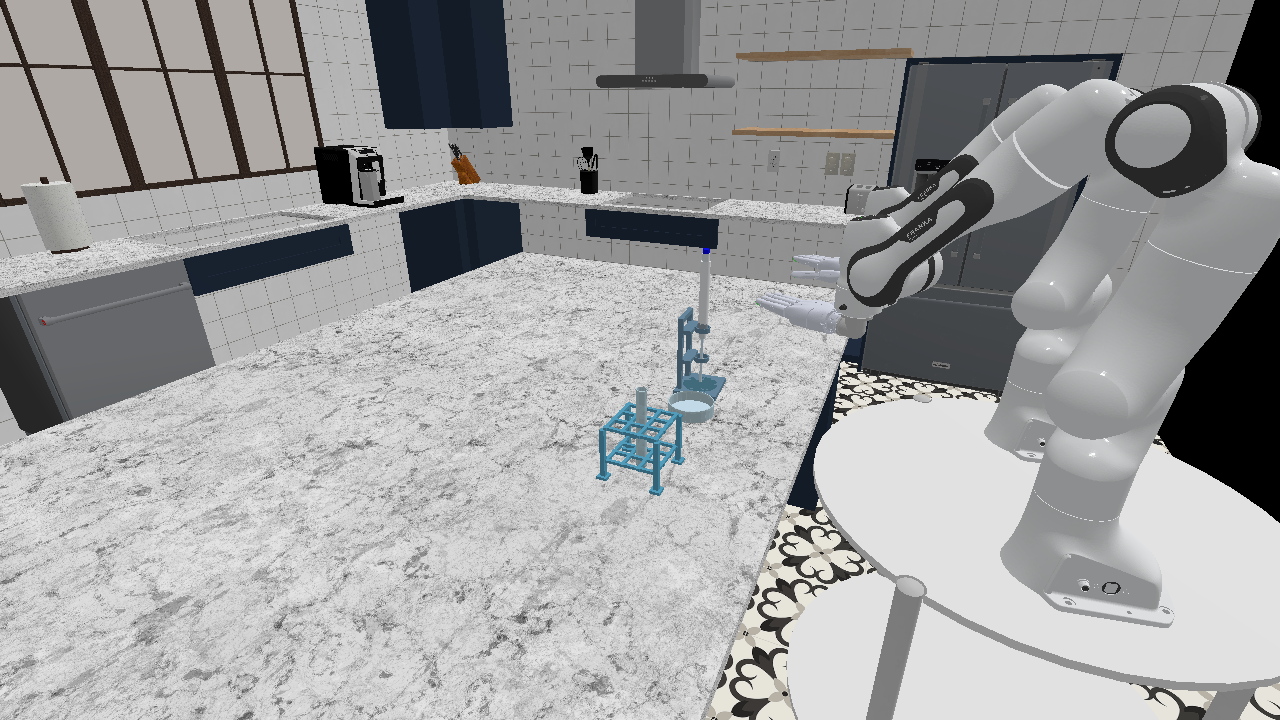
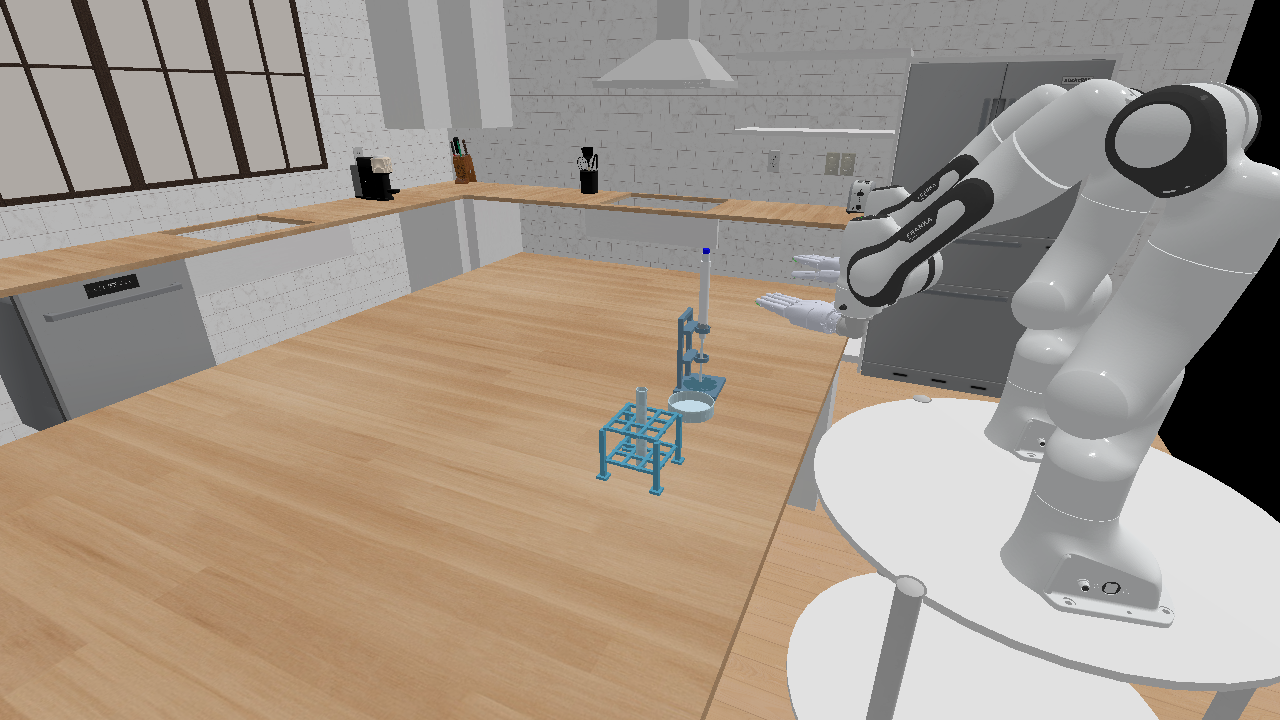
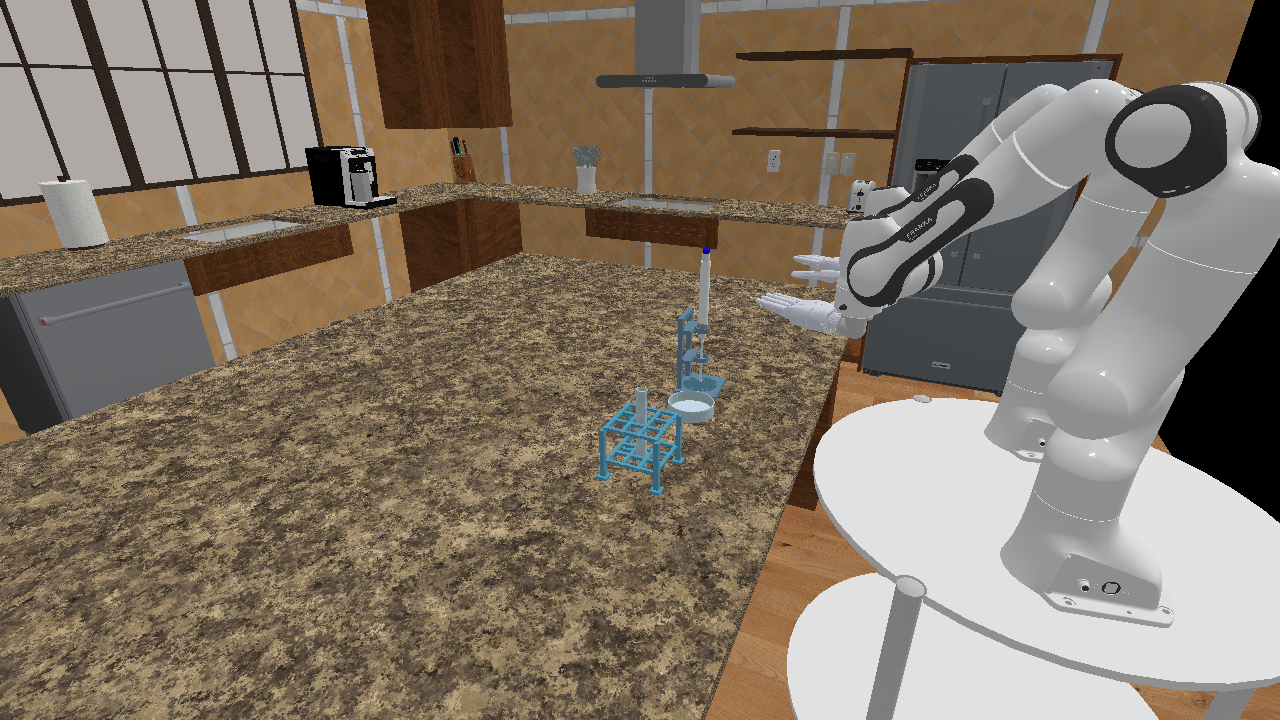
The same pipette workstation in blue stone, light wood and warm wood kitchens. Evaluate all 30 stages across these three native backgrounds.

robocasa_l3_s2
robocasa_l3_s1
robocasa_l3_s6Six baselines evaluated on execution, visual generalization and long-horizon composition. All scores below are reported in the supplied manuscript.
GR00T records the highest average success in the training scene. ACT and RLPD follow, but no method consistently solves every stage.
50 evaluation episodes per stage. Scores are averaged over 30 canonical stages.
π0.5 leads across three held-out kitchens. Its average is 2.9 percentage points below the training-scene result; the same policy is evaluated without adaptation.
50 episodes per stage per scene. ± denotes standard deviation across three scene averages, not a confidence interval.
π0.5 and ACT report non-zero average success on complete sequences. Successful individual stages do not yet translate into reliable end-to-end behavior.
50 episodes per complete task. Success requires reaching the final task condition without resets between stages.
Compare PPO, RLPD, ACT, Diffusion Policy, GR00T and π0.5 across all stages and complete sequences.